
Helping children understand feelings through movement, pace and direction.
Some children do not understand their feelings by sitting still and talking.
They understand them through movement. Through pace. Through direction. Through stopping and starting.
Mindset in Motion helps children notice what is happening inside their body through movement, sport and basketball-inspired activities.
Pause.
Reset.
Not every child can explain a feeling with words.
When a child is overwhelmed, frustrated, anxious, excited or unsure, the feeling is not only in their thoughts.
It is in their body.
It can show up in the way they rush, stop, avoid, move towards something, pull away from something, freeze or react when space, pressure, teamwork or direction changes.
For some children, asking them to “use their words” too soon can make the moment harder.

When feelings stay in the body, they can look like behaviour.
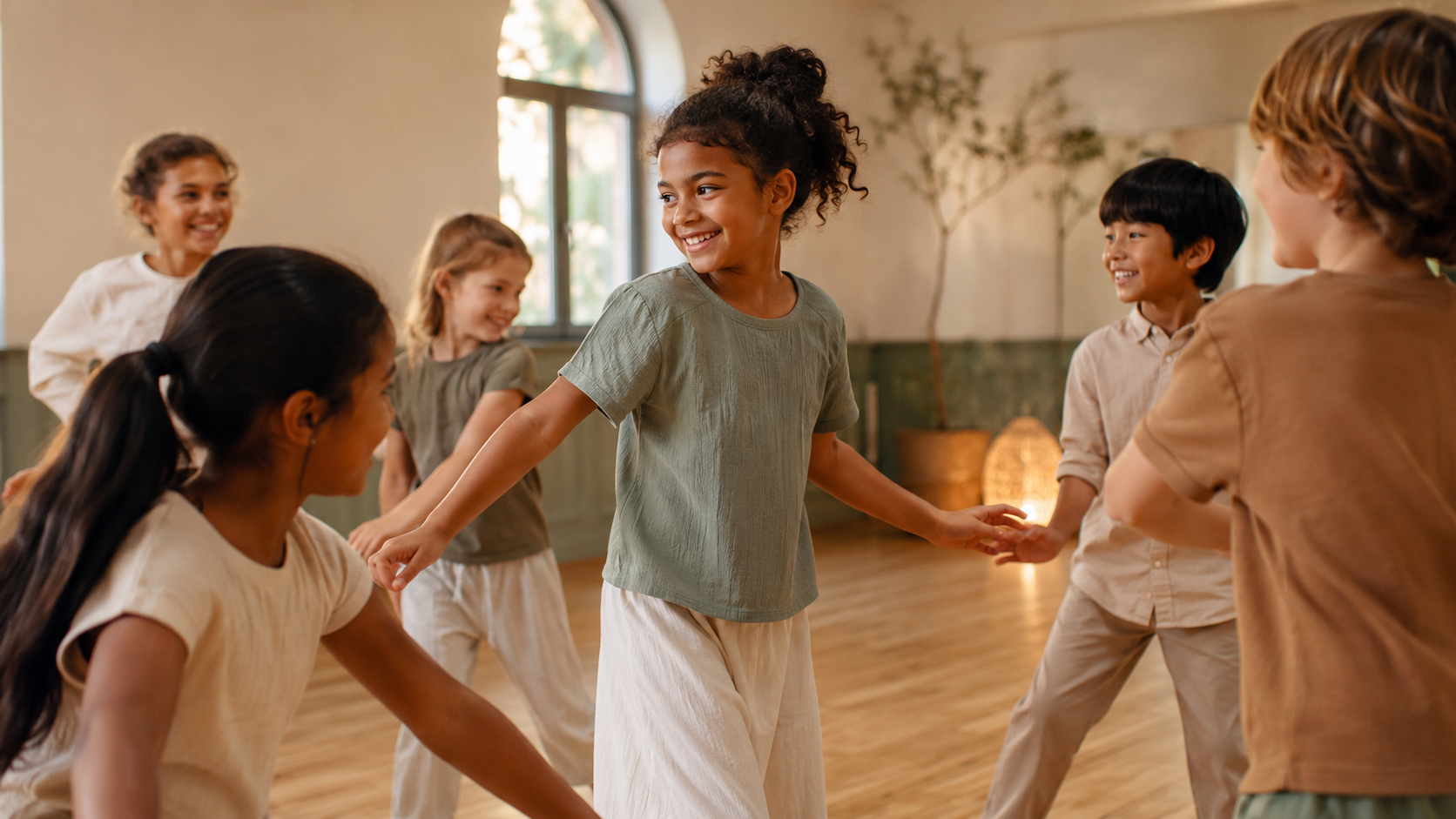
A child might run too fast because they feel out of control.
They might freeze because something feels too much.
They might push forward when they feel pressure, move away when they feel unsure, or get frustrated when the direction changes.
From the outside, it can look like they are not listening, not trying, not joining in or not coping. But underneath, there is often a feeling they have not yet learned how to understand.
Movement gives children another way in.
Mindset in Motion uses movement as the language for emotional awareness.
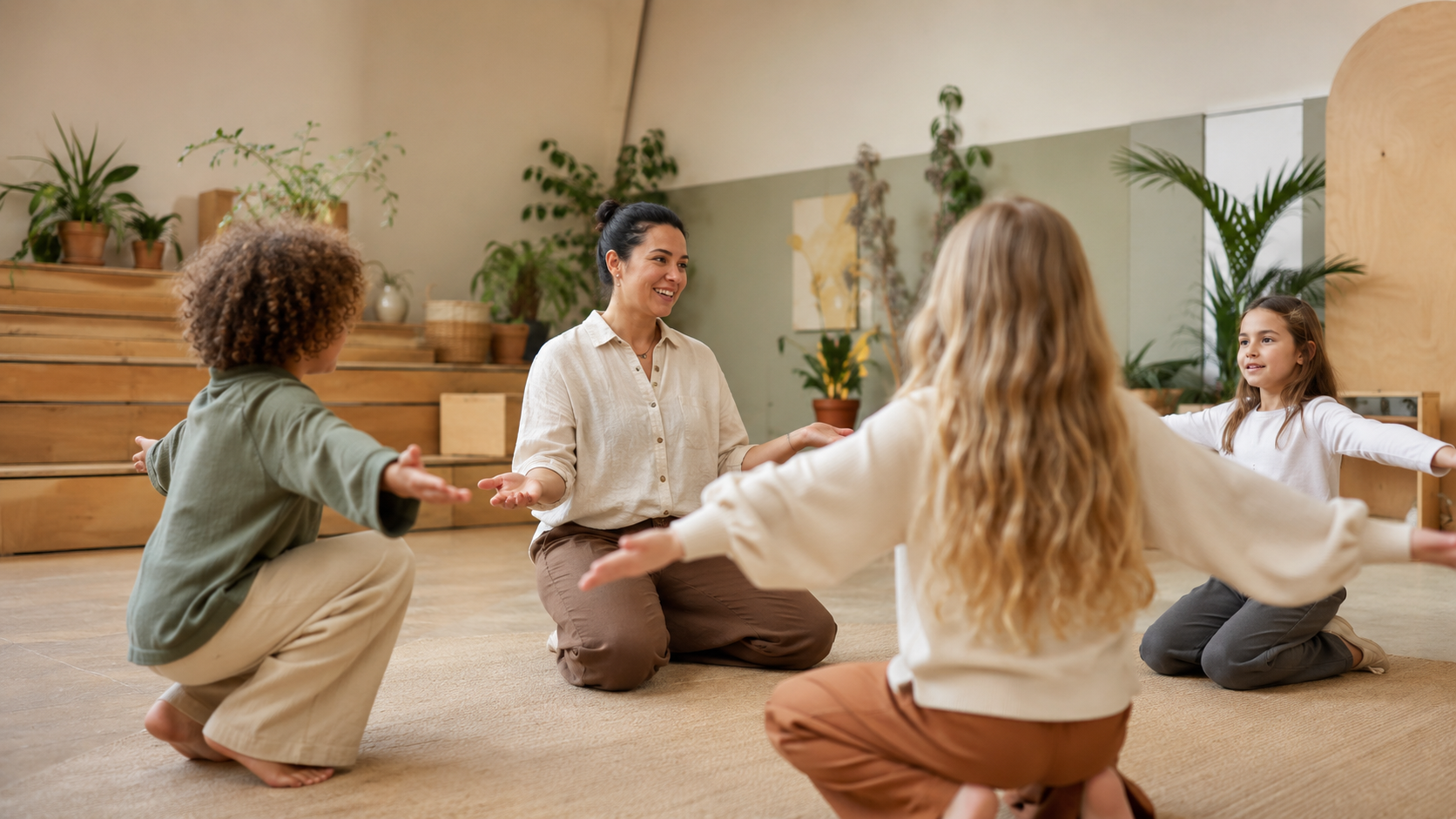
Children learn to notice what their body is doing. They explore what happens when they speed up, slow down, pause, change direction, move into space, respond to pressure or work with others.
Sport becomes the setting. Movement becomes the tool. Emotion is the learning.
Mindset in Motion uses simple movement and basketball-inspired activities to help children understand feelings through the body.
Pace helps children notice energy.
Some feelings speed the body up. Some feelings slow the body down. Some feelings make the body feel stuck. Through pace, children begin to notice their energy before it becomes overwhelm.
Direction helps children understand choice.
Feelings can pull children towards something, away from something, backwards, forwards or sideways. Direction helps them explore how it feels to change course and choose a next step.
Pause helps children find the reset.
The pause is not a punishment. It is a tool. Stopping can be the moment where a child notices their body, breath, choices and what comes next.
Basketball gives children a live way to explore emotion through movement.
The game naturally includes pace, direction, pressure, space, teamwork, decision-making and reset.
A child can learn about themselves through how they move, how they respond when the ball changes direction, how they react when someone gets close, and how they handle waiting, passing, missing, trying again or working with a team.
The basketball is not the point. It is the tool. The learning is emotional awareness.
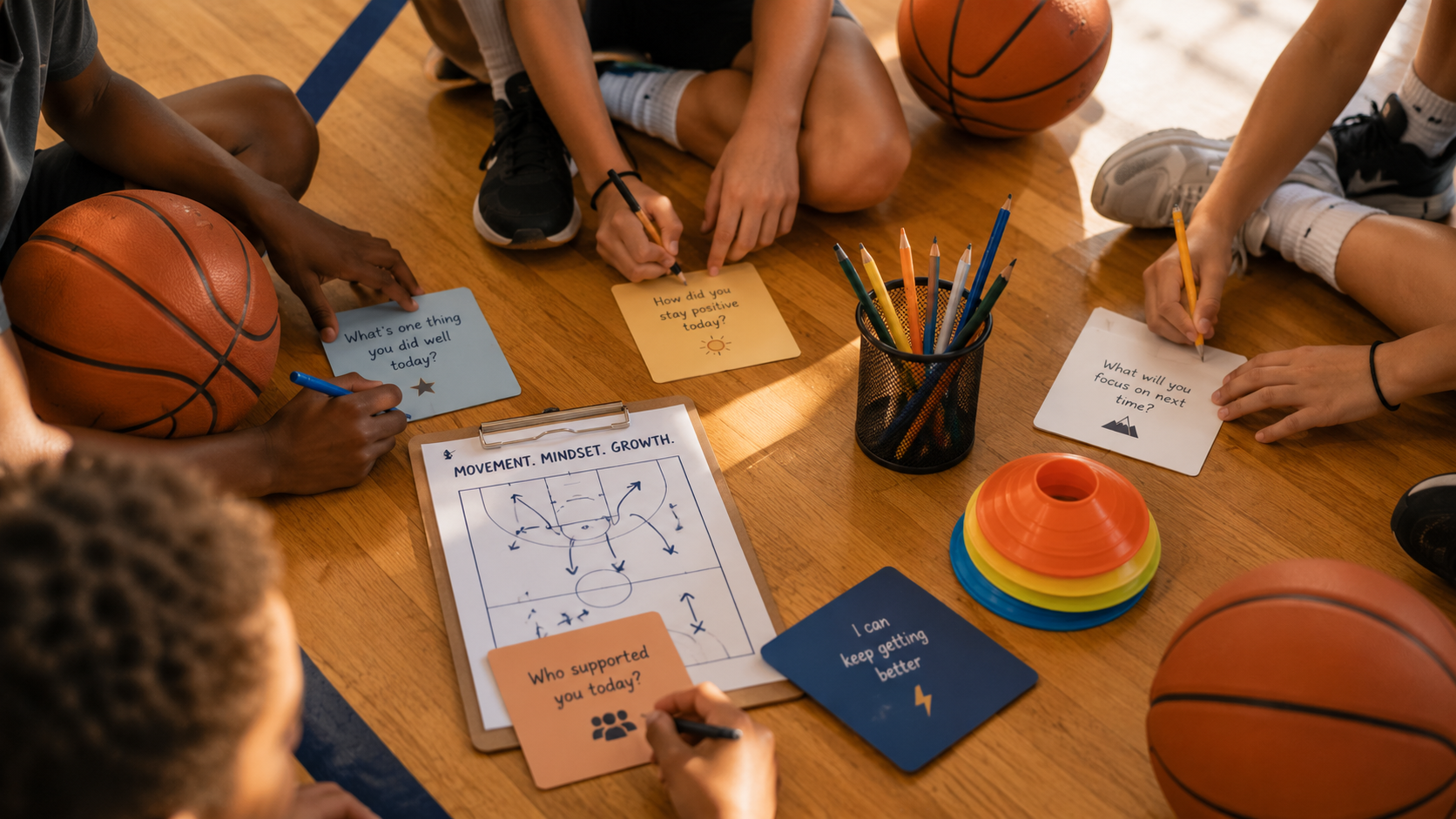

Children begin to ask:
- What happens in my body when I feel rushed?
- What happens when I need to stop?
- What happens when something changes direction?
- What happens when I feel pressure?
- What helps me reset?
- What does my body need next?
Four stages of emotional awareness through movement.
The pathway can support children and young people across different ages and stages, from primary movement awareness through to future direction.
Game Ready
For primary-age children. Helping children understand feelings through movement, play, pace, direction, teamwork and simple basketball-inspired activities.
Future Game Plan
For ages 11 to 15. Supporting young people to notice emotional patterns, body signals, pressure responses, confidence wobbles and next-step choices through movement.
Further Game Plan
For college and university age. Helping young people connect emotional awareness, self-leadership, movement, study, identity and future direction.
The Game Plan
The scholarship-facing pathway. Supporting young people as basketball, education, emotional regulation, performance mindset and future direction begin to connect.
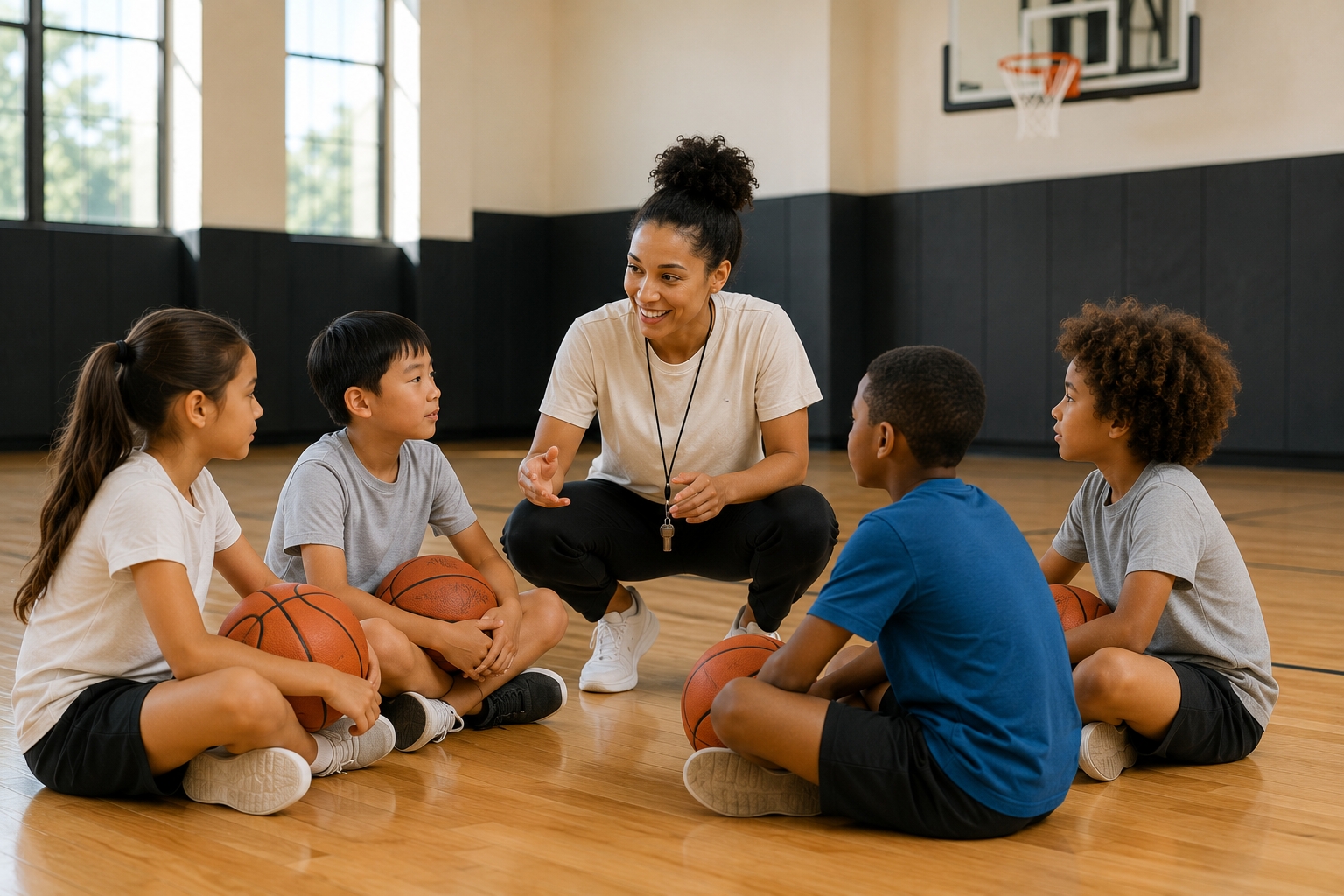
Emotional literacy through movement.
Mindset in Motion can support schools, clubs and community spaces that want children to develop emotional awareness through movement.
This may include movement-led emotional literacy sessions, basketball-inspired workshops, group reflection activities, confidence and regulation tools, or partnership projects.
It is designed for children and young people who need practical ways to understand what they feel and how their body responds.
Children do not always need to be told what they feel.
Sometimes they need to move first.
Then notice.
Then pause.
Then understand.
Then choose one next step.

Bring Mindset in Motion into your school, club or community space.
Support children and young people to understand emotions through movement, pace, direction, pressure, pause and reset.